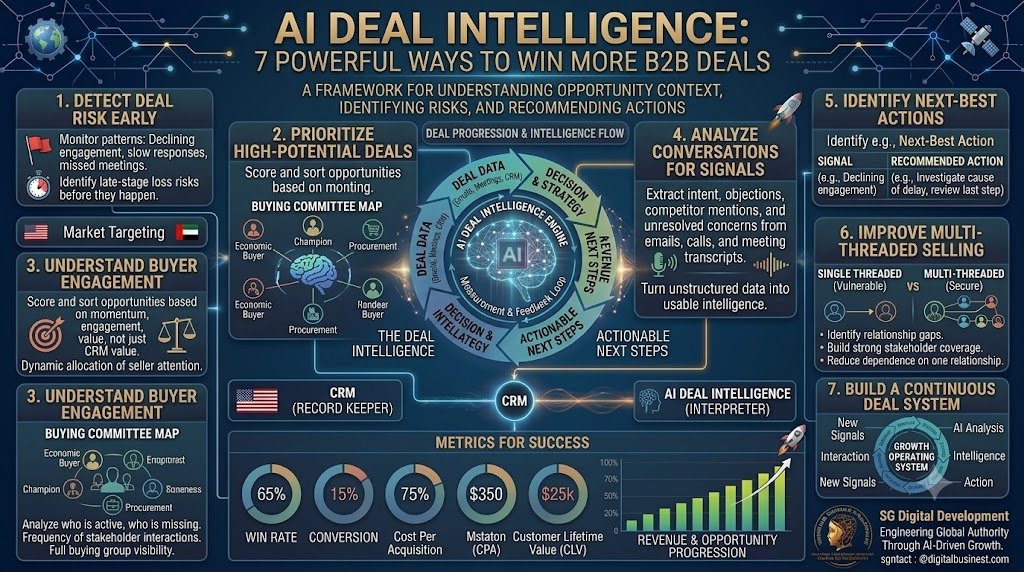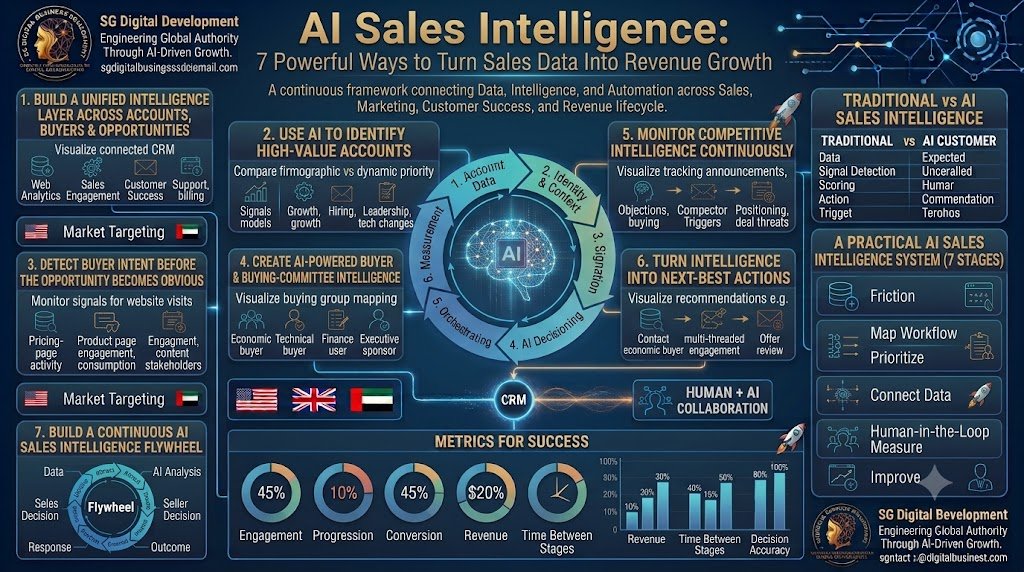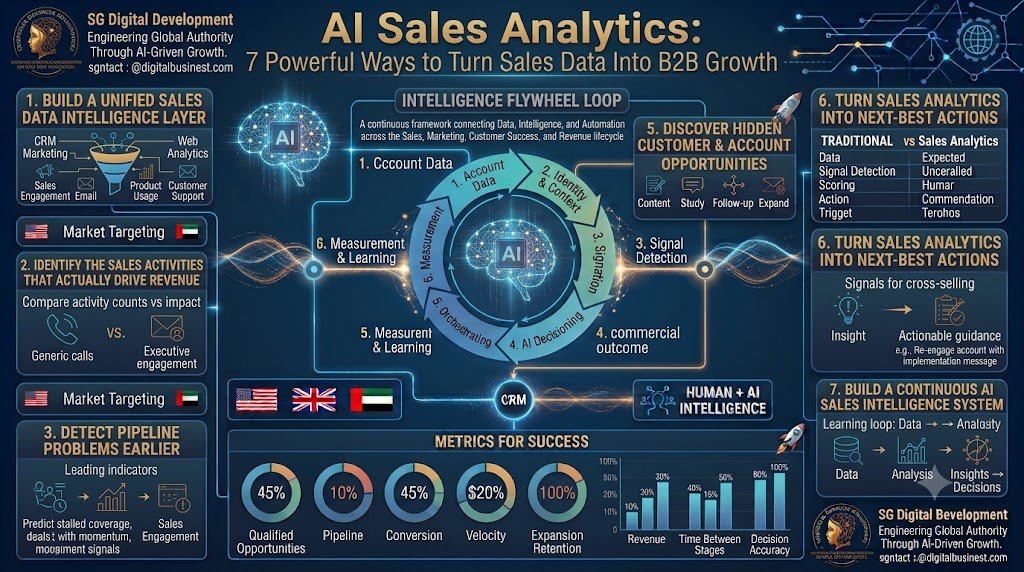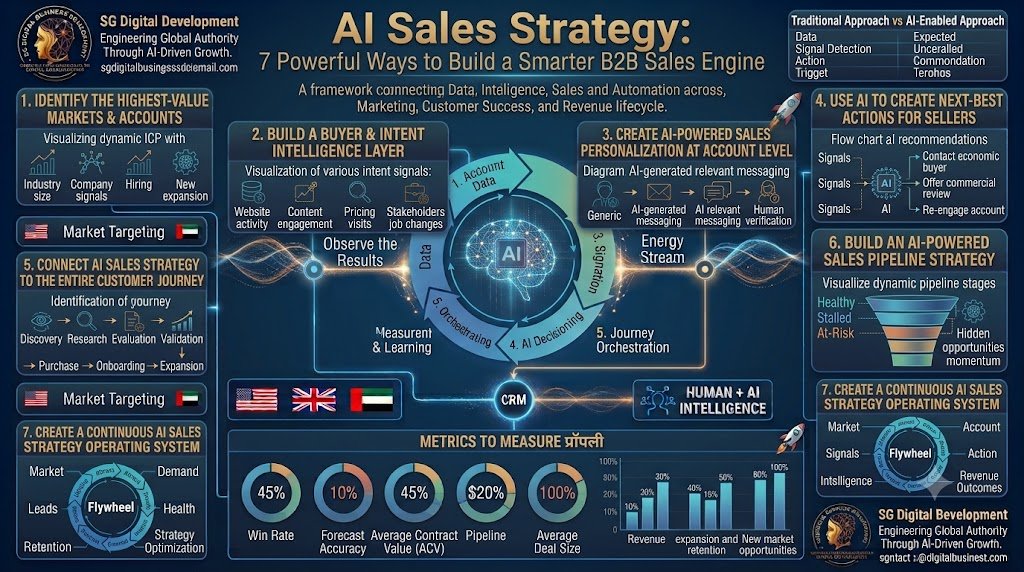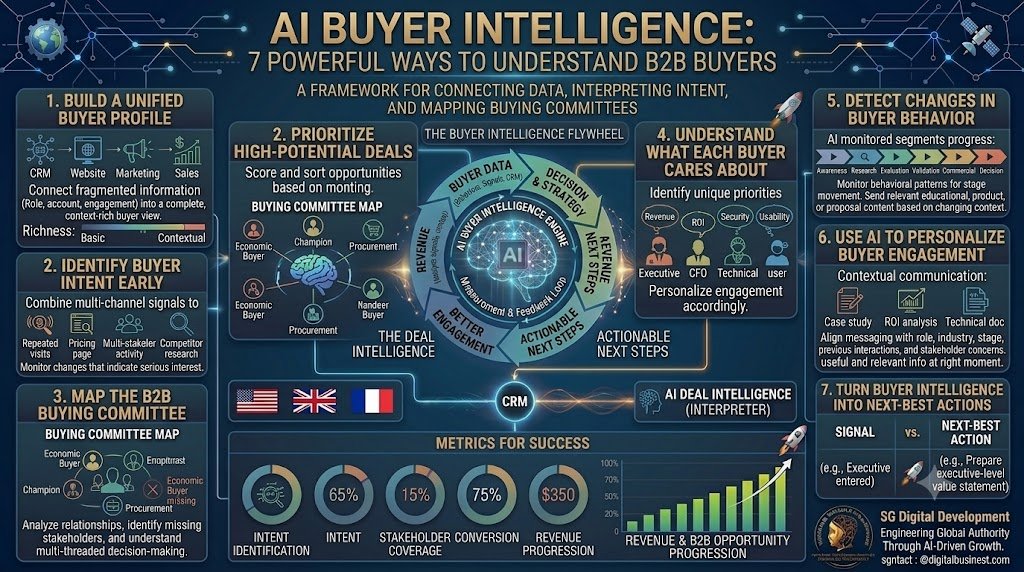
AI Buyer Intelligence: 7 Powerful Ways to Understand B2B Buyers.
AI Buyer Intelligence: 7 Powerful Ways to Understand B2B Buyers Introduction B2B buyers have more information than ever before. They can research vendors through search engines, AI assistants, review platforms, websites, communities, social networks, analyst content and peer recommendations before speaking with a salesperson. At the same time, buying decisions are becoming more complex. A single B2B purchase may involve: The result is a difficult challenge for sales and marketing teams. The organization may have plenty of customer and prospect data, but still struggle to understand: This is where AI buyer intelligence becomes valuable. AI buyer intelligence combines artificial intelligence, buyer data, behavioral signals, account information, engagement patterns and commercial context to help businesses understand how buyers behave and what they may need throughout the B2B buying journey. The goal is not simply to collect more buyer information. The goal is to transform: Buyer Data → Buyer Intelligence → Better Engagement → Better Decisions → Revenue Gartner’s 2026 research shows how important this shift has become. One Gartner survey found that 45% of B2B buyers had used GenAI during a purchase, while 69% said they preferred to validate AI-generated insights with sales representatives. This creates a new commercial environment. Buyers increasingly research independently, but human sellers still matter when buyers need validation, confidence, context and help moving forward. For businesses, understanding the buyer therefore becomes more important than simply generating more leads. This article explores 7 powerful AI buyer intelligence strategies that can help B2B companies understand buyers, identify intent, map buying committees, personalize engagement and create stronger revenue opportunities. What Is AI Buyer Intelligence? AI buyer intelligence is the use of artificial intelligence to collect, connect, analyze and interpret information about B2B buyers so businesses can make better marketing, sales and customer decisions. Traditional buyer research may involve: AI can connect these different information sources and identify patterns. A modern buyer intelligence system may analyze: The objective is to create a more complete picture of the buyer. For example: A prospect repeatedly researches implementation information, shares product content with colleagues and brings a technical stakeholder into a sales conversation. Individually, these events may not provide much insight. Together, they may indicate that the buying process is becoming more serious. AI can help connect the signals. That is the foundation of buyer intelligence. AI Buyer Intelligence vs Traditional Buyer Research Traditional buyer research often happens periodically. A company might: This can provide valuable information. But buyer behavior changes continuously. AI can help create a more dynamic intelligence layer. Traditional buyer research Focuses on: AI buyer intelligence Can analyze: The distinction is important. Traditional research asks: “Who is our buyer?” AI buyer intelligence asks: “What is this buyer doing, what may they need now, and what should we understand about their decision process?” Why AI Buyer Intelligence Matters in 2026 B2B buying is becoming increasingly self-directed. Gartner reported that B2B buyers use an average of seven information sources during a purchase, while 67% in its 2026 survey preferred a sales-rep-free experience and 70% preferred a completely digital self-service buying experience. At the same time, buyers still turn to sales representatives for validation and decision support. This creates an important paradox. Buyers want independence. But they still need expertise. A modern sales organization therefore needs to understand when the buyer wants: AI buyer intelligence can help identify these changing needs. It can help answer: Where is the buyer? What does the buyer care about? Who else is involved? What information is missing? What should the business do next? 7 Powerful AI Buyer Intelligence Strategies 1. Build a Unified Buyer Intelligence Profile The first step is creating a complete view of the buyer. Many organizations have buyer information scattered across different systems. For example: CRM Marketing Website Sales Customer success Each source provides only part of the picture. AI can help connect these signals. The result is a more complete buyer profile. Example A buyer may appear in the CRM as: Marketing Director But additional intelligence may reveal: The buyer profile is now much richer. Instead of knowing only the person’s title, the sales team can understand the context surrounding the buying process. 2. Identify Buyer Intent Earlier One of the most important uses of AI buyer intelligence is detecting potential intent. Buyer intent can appear through multiple signals. Examples include: A single signal is rarely enough. The value comes from combining signals. Example Suppose an account previously showed little activity. Over the next two weeks: AI can connect these events. The system may identify: Increasing buyer engagement detected. This does not mean the account will definitely purchase. It means the pattern deserves investigation. That distinction is critical. AI identifies signals. Humans interpret context. 3. Map the B2B Buying Committee B2B purchases rarely depend on one person. The buying committee may include: Each stakeholder may have different priorities. Executive Cares about: Finance Cares about: Technical Cares about: User Cares about: Procurement Cares about: AI buyer intelligence can help identify these different stakeholder relationships. It can also identify gaps. For example: Strong technical engagement but no economic buyer identified. That is a useful commercial signal. Another example: Multiple users are engaged, but executive sponsorship is unclear. The sales team can then decide whether executive-level engagement is necessary. Salesforce’s current B2B automation capabilities similarly emphasize understanding the buying committee, identifying missing members and using cross-channel interactions to support next-best actions. 4. Understand What Each Buyer Actually Cares About Different stakeholders can participate in the same purchase for completely different reasons. Consider a B2B AI software purchase. The CEO may care about: Revenue growth. The CFO may care about: Return on investment. The sales leader may care about: Productivity. The IT team may care about: Security and integration. The end user may care about: Ease of use. A generic sales message will not address all of these needs. AI buyer intelligence can help identify the topics each stakeholder engages with. For example: Buyer A Frequently interacts with: Potential interest: Commercial value Buyer B Frequently interacts