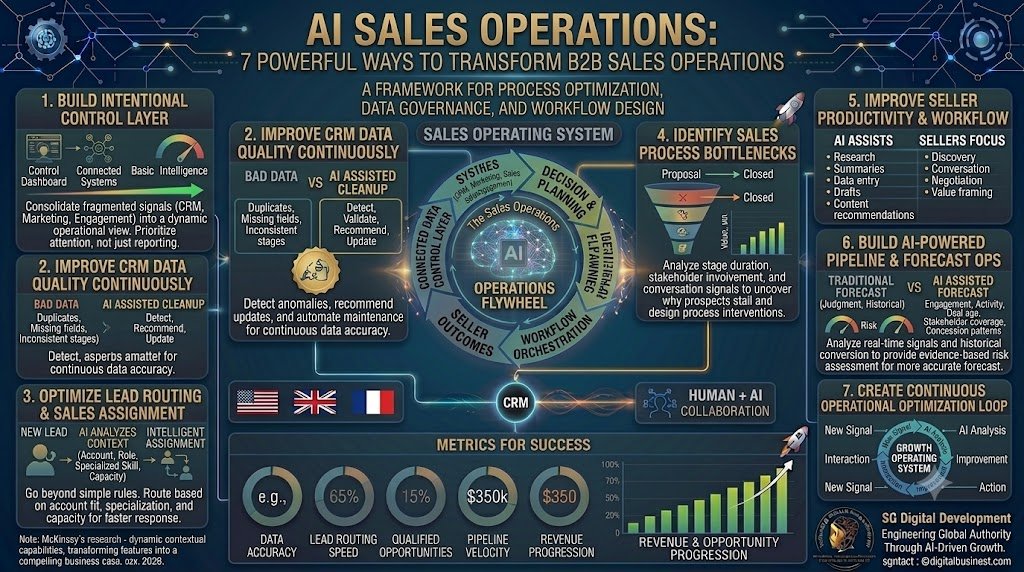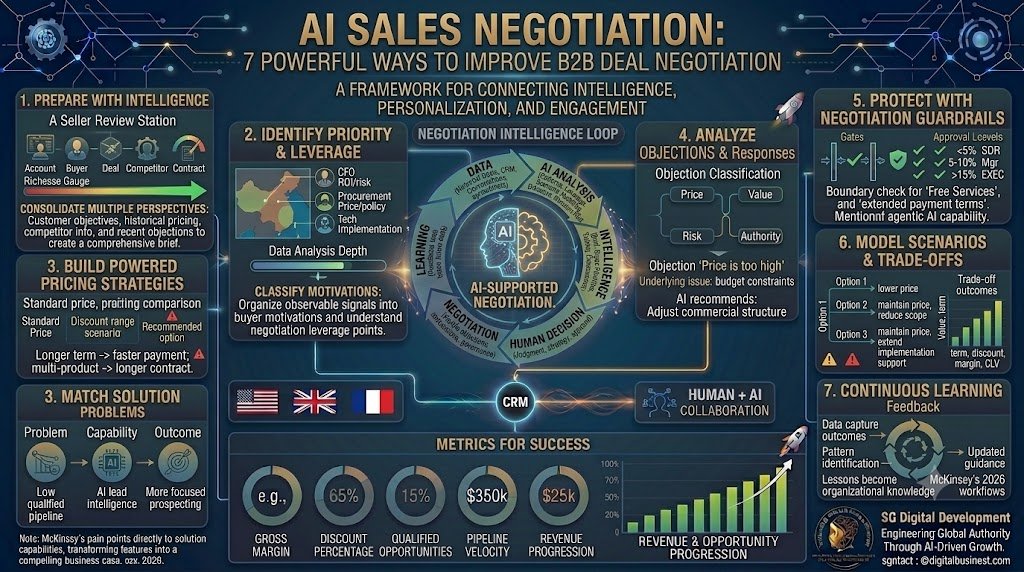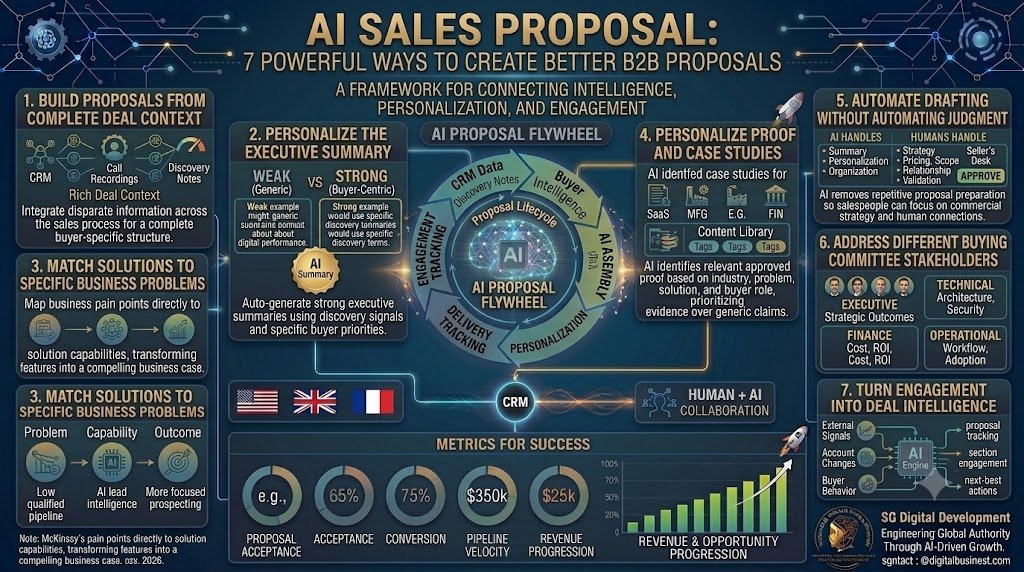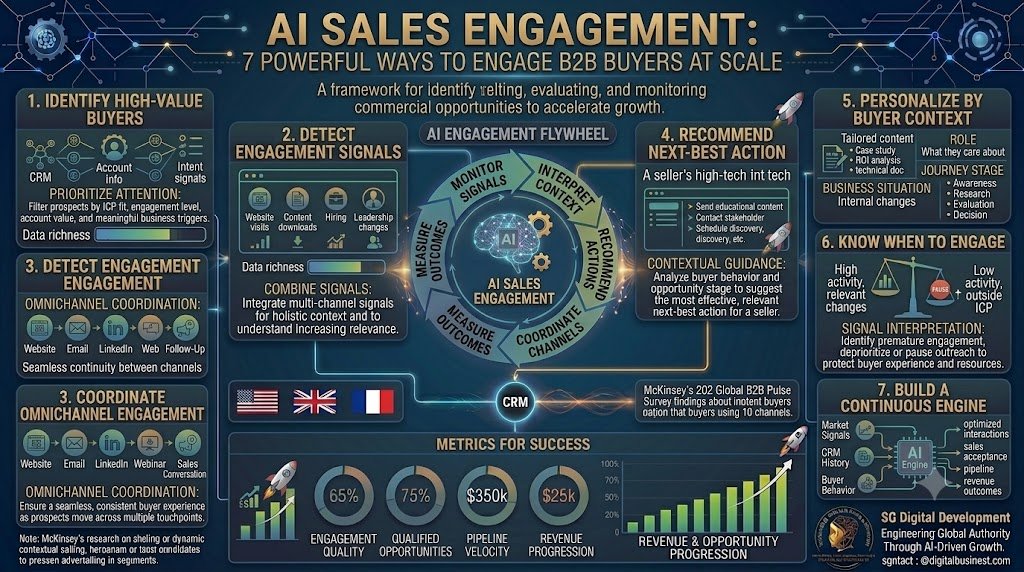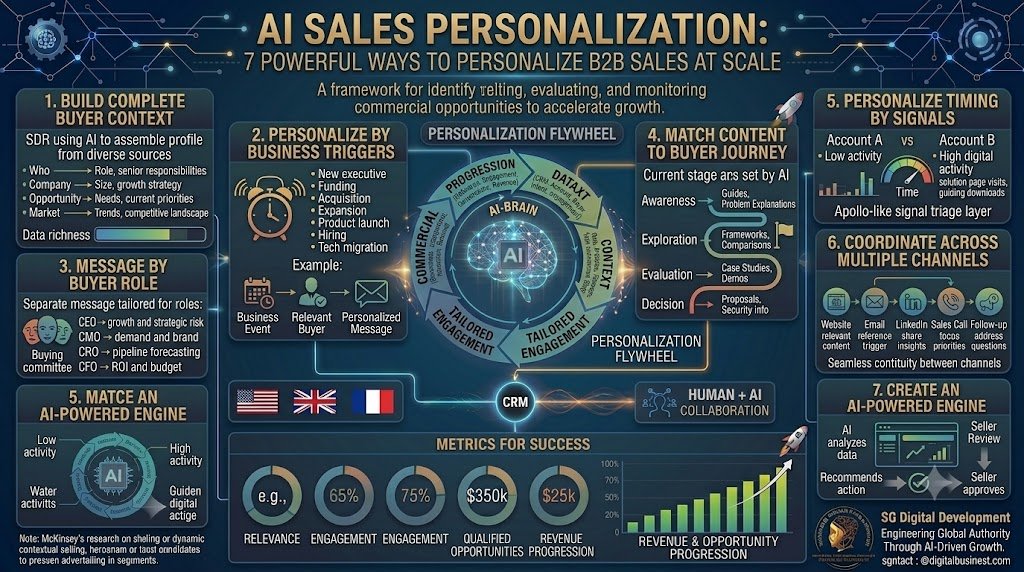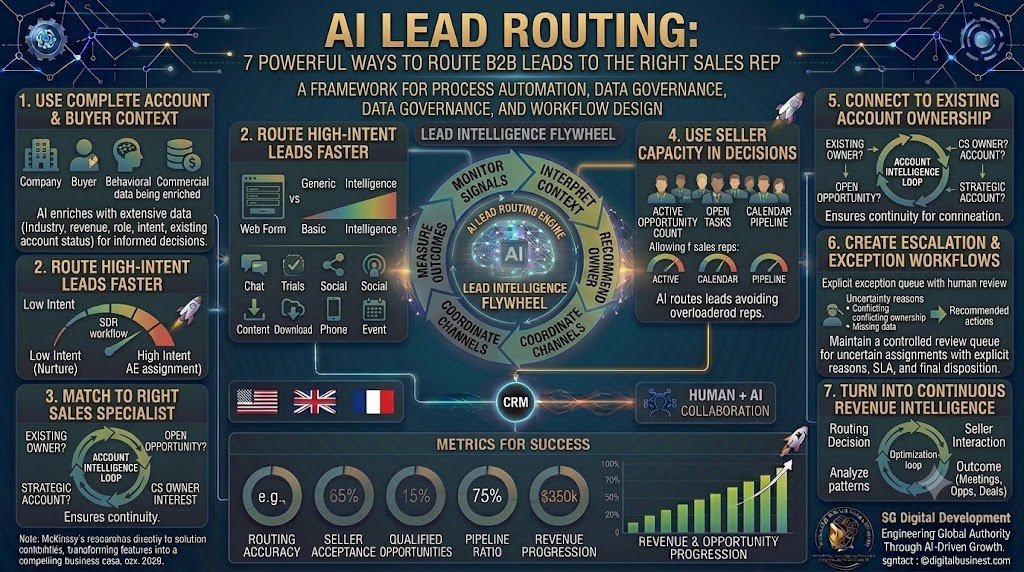
AI Lead Routing: 7 Powerful Ways to Route B2B Leads to the Right Sales Rep.
AI Lead Routing: 7 Powerful Ways to Route B2B Leads to the Right Sales Rep. Introduction Generating a B2B lead is only the beginning of the sales process. What happens immediately after the lead arrives can have a major impact on whether that lead becomes a conversation, an opportunity or a lost record inside the CRM. A lead may need to be: When those steps are handled manually, delays and ownership problems can appear quickly. A high-value enterprise prospect may enter the CRM and wait in a general queue. A lead from an existing account may be assigned to the wrong salesperson. A prospect in a specialized industry may reach a representative without the relevant expertise. A high-intent buyer may receive the same response process as a low-intent inquiry. This is where AI lead routing becomes strategically important. AI lead routing uses artificial intelligence, customer data, account intelligence, behavioral signals, business rules and sales capacity information to determine where an incoming lead should go and what should happen next. Instead of simply asking: “Which salesperson gets the next lead?” a modern routing system can evaluate: That makes AI lead routing much more than an automated round-robin system. It becomes part of the organization’s revenue infrastructure. Recent 2026 guidance on AI lead routing emphasizes that routing should combine ownership rules, approved enrichment, CRM evidence, capacity and clear exception handling rather than turning assignment into an unexplained AI decision. This guide explains seven powerful ways businesses can use AI lead routing to improve B2B lead distribution, seller productivity, speed-to-lead and revenue execution. What Is AI Lead Routing? AI lead routing is the use of artificial intelligence and automated decision logic to determine which salesperson, sales team, territory or workflow should receive an incoming lead. Traditional lead routing usually relies on static rules. For example: If the lead is located in California, assign it to Salesperson A. Or: If company size is above 500 employees, assign it to the enterprise team. Or: Send every new lead to the next salesperson in a round-robin queue. These rules can work when the sales organization is simple. But B2B organizations often have much more complex requirements. A lead may need to be routed according to: AI lead routing can analyze multiple signals simultaneously. The goal is not simply to route leads faster. The goal is to route the right lead to the right owner with the right context at the right time. Why AI Lead Routing Matters in 2026 B2B buyers increasingly interact with companies across multiple digital channels. A lead might arrive through: Each source can provide different information. A website demo request may contain explicit buying intent. A content download may indicate early research. A partner referral may already have a relationship attached to it. An existing customer inquiry may need to remain with the account owner rather than entering a new-business queue. Static routing systems often struggle with this complexity. Modern AI lead routing can use the available context to determine which workflow should apply. The 2026 routing landscape increasingly emphasizes enrichment before routing, account-level ownership, capacity-aware assignment and auditable decisions. This creates a more intelligent connection between marketing activity and sales execution. AI Lead Routing vs Traditional Lead Routing Traditional routing usually follows predefined rules. For example: Lead enters CRM ↓ Check geography ↓ Check company size ↓ Assign representative That approach is predictable, but it can be limited. AI-enabled routing can introduce additional layers. Lead enters CRM ↓ Enrich account ↓ Identify existing ownership ↓ Analyze intent ↓ Evaluate account value ↓ Evaluate seller fit ↓ Evaluate capacity ↓ Apply routing policy ↓ Assign owner ↓ Trigger next-best action The difference is not simply automation. It is the amount of context used to make the decision. Traditional rules remain useful. In fact, critical ownership and compliance rules should often remain deterministic. AI is most valuable where interpretation and prioritization are required. That combination can create a more reliable routing architecture. 7 Powerful Ways to Use AI Lead Routing 1. Route Leads Using Complete Account and Buyer Context The first major application of AI lead routing is using more than the information submitted through the lead form. A typical form may contain: That is useful, but incomplete. AI can help enrich the lead with additional information. For example: Company Information Buyer Information Behavioral Information Commercial Information The routing system can then make a more informed decision. For example: A VP of Marketing from a 2,000-person SaaS company has visited the pricing page three times, downloaded an enterprise guide and belongs to an account with an existing opportunity. That lead should probably not enter the same workflow as an anonymous early-stage content download. Context changes routing. This is one of the central advantages of AI lead routing. 2. Route High-Intent Leads Faster Speed matters when a buyer has actively raised their hand. Not every lead requires the same response speed. Consider three leads. Lead A Downloads a general industry report. Lead B Requests a product comparison. Lead C Requests a pricing discussion and mentions an implementation timeline. All three are leads. But they represent different levels of buying intent. AI can analyze available signals and place leads into different routing paths. Low Intent Automated nurture ↓ Medium Intent Sales development workflow ↓ High Intent Immediate sales assignment This allows sales teams to prioritize attention. The purpose of AI lead routing is not necessarily to send every lead to a salesperson instantly. It is to determine which leads deserve which level of sales attention. That distinction helps prevent sales teams from becoming overwhelmed by low-value inbound volume. 3. Match Leads to the Right Sales Representative The “right salesperson” is not always the person who happens to be next in a round-robin queue. B2B sales teams often have different specializations. A company may have representatives focused on: A lead should ideally reach someone capable of understanding the buyer’s situation. AI can evaluate: This creates a fit-based routing model. For example: A healthcare enterprise lead