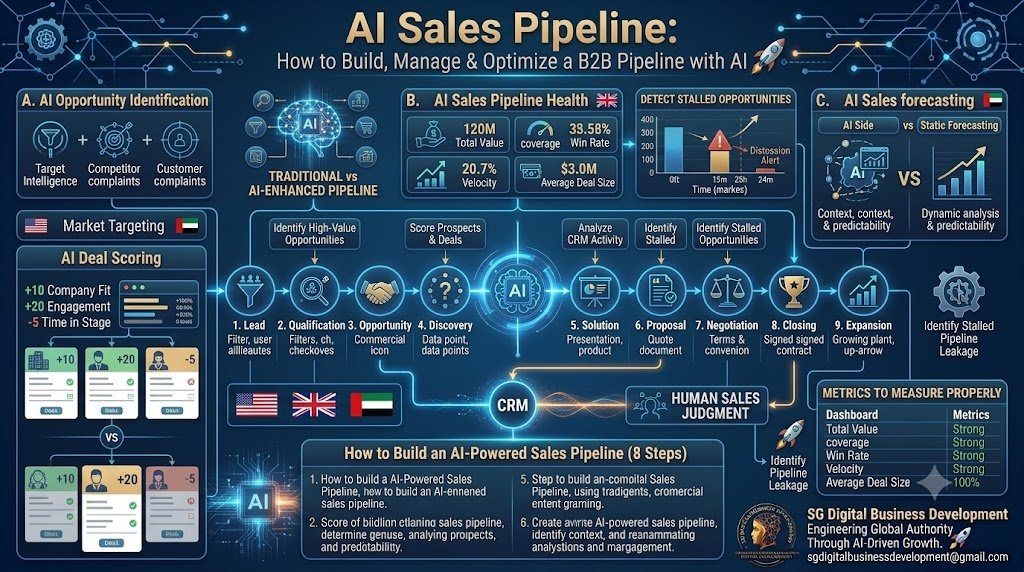
AI Sales Pipeline: How to Build, Manage & Optimize a B2B Pipeline with AI.
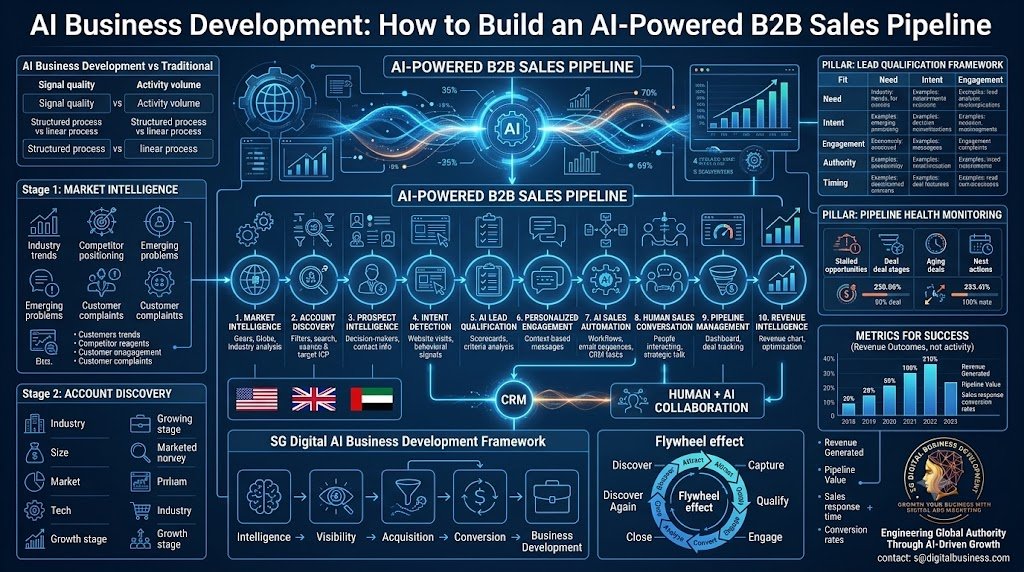
Introduction B2B sales pipelines have traditionally been managed through spreadsheets, CRM dashboards, sales meetings and manual forecasting. These systems can work, but modern B2B sales environments are becoming more complex. Companies now generate opportunities from multiple channels, including organic search, AI search, paid advertising, LinkedIn, outbound prospecting, referrals, content marketing and partnerships. At the same time, buyers conduct more independent research before speaking with a salesperson. This creates a challenge for sales teams. A company may have hundreds of leads and dozens of opportunities, but knowing which opportunities matter, which deals are progressing, which prospects are likely to stall and where revenue is coming from can be difficult. This is where an AI sales pipeline can become valuable. An AI sales pipeline uses artificial intelligence, CRM data, buyer signals, sales activity and automation to help businesses identify opportunities, prioritize deals, monitor pipeline health, automate appropriate follow-up and improve sales forecasting. The objective is not simply to automate sales tasks. The objective is to make the sales pipeline more intelligent. Instead of asking only: How many opportunities do we have? sales teams can begin asking: Which opportunities are most important, what is happening inside each deal, what action should happen next and how is the pipeline likely to develop? That shift can help B2B companies build a more structured and data-driven approach to revenue generation. What Is an AI Sales Pipeline? An AI sales pipeline is a B2B sales pipeline enhanced with artificial intelligence to help manage opportunities, analyze buyer signals, prioritize deals, automate workflows and provide sales intelligence. A traditional sales pipeline might contain stages such as: Lead → Qualified Lead → Meeting → Proposal → Negotiation → Closed An AI-powered pipeline adds intelligence to these stages. For example, AI can help: The AI layer does not replace the CRM. Instead, it can make the information inside the CRM more useful. Why B2B Companies Need an AI Sales Pipeline B2B sales teams deal with large amounts of information. A single opportunity can involve: When a sales team has dozens or hundreds of opportunities, manually reviewing every signal becomes difficult. An AI sales pipeline can help organize this information. It can potentially identify patterns that humans may overlook when reviewing a large CRM database. For example: These signals can help sales teams decide where to focus their attention. AI Sales Pipeline vs Traditional Sales Pipeline The traditional sales pipeline focuses primarily on stages and activities. For example: Traditional Pipeline AI-Enhanced Pipeline Lead status Lead and opportunity intelligence Manual qualification AI-assisted qualification Sales activity Activity + engagement analysis Manual follow-up Automated follow-up workflows Static pipeline report Dynamic pipeline intelligence Manual forecasting AI-assisted forecasting Sales manager review Continuous opportunity monitoring Historical analysis Predictive and behavioral analysis The difference is not that traditional sales systems disappear. Instead, AI adds another layer of intelligence. The CRM remains the operational foundation. AI helps interpret the information inside it. The Stages of an AI Sales Pipeline A B2B sales pipeline can be structured around several stages. Stage 1: Lead A potential customer enters the system. Stage 2: Qualification The company evaluates fit, need and intent. Stage 3: Opportunity A genuine commercial opportunity is identified. Stage 4: Discovery Sales professionals understand the business problem, requirements and buying process. Stage 5: Solution The company presents a relevant solution. Stage 6: Proposal Commercial terms and proposals are discussed. Stage 7: Negotiation The buyer and seller work through pricing, scope and contractual considerations. Stage 8: Closing The opportunity becomes a customer or is lost. Stage 9: Expansion Existing customers may generate additional opportunities. AI can support intelligence throughout these stages. 1. AI Opportunity Identification One of the first applications of AI in pipeline management is identifying which leads have the potential to become opportunities. Not every lead is a sales opportunity. A lead may download content without having purchase intent. Another lead may actively evaluate solutions and request a meeting. AI can help analyze available signals to identify the difference. Potential opportunity signals include: The objective is to help sales teams focus on meaningful commercial opportunities. 2. AI Lead-to-Opportunity Conversion The transition from lead to opportunity is one of the most important parts of the B2B sales process. A company can generate hundreds of leads without creating a healthy pipeline. AI can help analyze which leads are progressing. For example: Lead A Strong company fit + relevant need + high engagement → Potential opportunity Lead B Strong company fit + low current engagement → Nurture Lead C Weak fit + low engagement → Lower priority This can help prevent sales teams from spending the same amount of time on every lead. 3. AI Deal Scoring Lead scoring evaluates potential leads. Deal scoring focuses on opportunities that have already entered the sales pipeline. An AI deal-scoring system can consider factors such as: The score should not be treated as an unquestionable decision. It should act as a signal that helps sales professionals prioritize their attention. 4. AI Pipeline Prioritization Sales teams rarely have unlimited time. If there are 50 open opportunities, which five should receive immediate attention? AI can help prioritize them using multiple signals. For example: High attention Monitor Re-engage This creates a more dynamic pipeline. Instead of treating every opportunity equally, sales teams can focus on opportunities based on current evidence. 5. AI Sales Pipeline Health Pipeline health is about understanding whether the pipeline is capable of producing future revenue. Important indicators include: AI can help analyze these metrics together. For example, a pipeline may appear healthy because it contains $1 million in opportunities. But if most opportunities have been inactive for months, the actual pipeline condition may be very different. AI can help surface these patterns. 6. Detecting Stalled Opportunities A stalled opportunity is one that remains open without meaningful progression. Common causes include: AI can monitor activity and identify opportunities that may be becoming inactive. For example: Opportunity: $40,000 Stage: Proposal Last meaningful activity: 17 days ago Expected stage duration: 7 days Possible action: Sales manager review